

Beard Transplant
The most common reason men want more facial hair is to change their appearance. A beard can work
like magic to enhance or minimise facial features. Hair loss on the face and the inability to grow a full
beard may be caused by genetics, ageing, alopecia or hormone imbalance.
An FUE beard transplant is a popular technique.
Grafts (individual hair follicles) are delicately and
expertly harvested one by one from the donor area, usually the back of the scalp, level with the ears.
The surgeon then makes tiny incisions in the recipient beard area and transplants the grafts to fill in an
uneven beard growth pattern, or to create a thicker, more attractive beard.
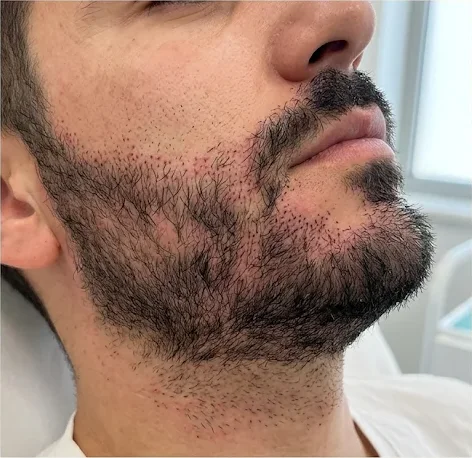
Moustache
350–500 grafts
Full goatee
700–1,200 grafts
Each sideburn
200–300 grafts
Each cheek
300–900 grafts
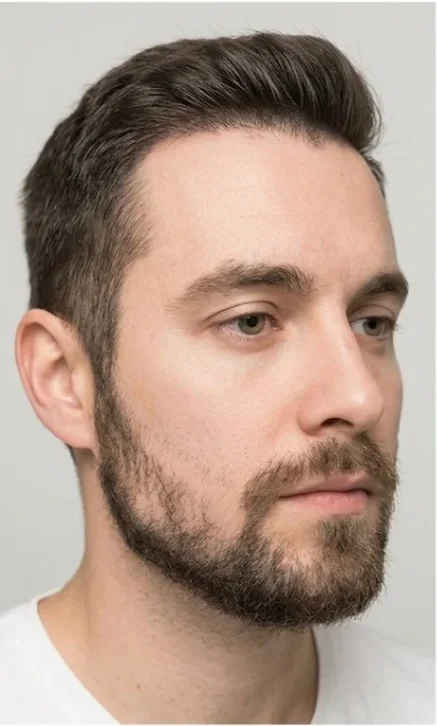
As the transplanted hair follicles come from an area of the head that resists hair loss, the results of a
beard transplant are permanent. Your beard and moustache transplant will look natural, as it is your
own hair.
Possible side effects
- Swelling and bruising
- Redness
- Pain and discomfort
- Itching
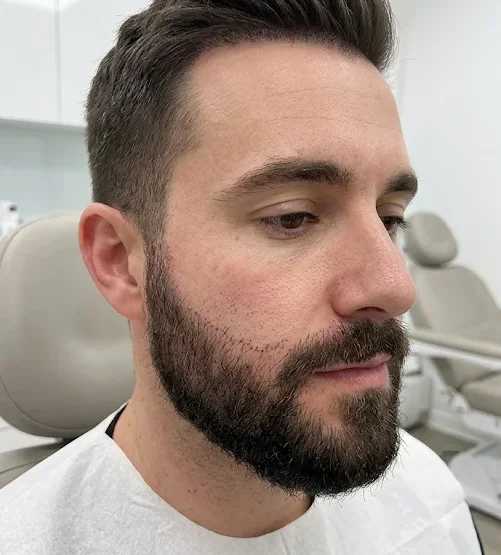
Personalized care
Aftercare
Following our surgeons’ post-operative care instructions is crucial for optimal recovery. Avoid touching
or scratching the grafted area, so you don’t disrupt the healing process or damage the transplanted
follicles. Hair regrowth after a beard transplant takes time, so be patient and expect gradual
improvement over the months.
We usually recommend starting minoxidil 3 weeks after the transplant. Minoxidil can help the
transplanted hair grow faster. If you choose not to use it, this will not affect the survival of the grafts:
they are permanent and will continue to grow.